How to create a home gym that inspires regular workouts instead of simply gathering dust?
Across the UAE, health and wellbeing have become an essential part of modern luxury living. Taking care of your body is no longer viewed as a short-term fitness goal but as a long-term investment in performance, longevity and everyday quality of life. As advances in medicine and wellness continue to extend life expectancy, the focus has naturally shifted towards healthspan — remaining active, healthy and energetic for as many years as possible.
This way of thinking is reshaping luxury homes.
Bedrooms, kitchens and living areas remain the foundation of every villa, but once additional space becomes available, priorities begin to change. Today, one of the growing priorities in luxury residential design is a private luxury home gym that complements a broader wellness lifestyle.
This evolution is especially relevant in the UAE, where indoor environments play an important role throughout much of the year. A thoughtfully designed home gym design makes daily exercise convenient, comfortable and completely private, allowing fitness to become part of everyday life rather than another scheduled activity.
Yet one common problem remains.
Many home gyms are beautifully equipped but rarely used. In most cases, the issue is not the equipment itself — it is the experience the room creates. Successful luxury gym design is about much more than placing premium machines inside a spare room. It is about designing a space that naturally motivates people to return every day.
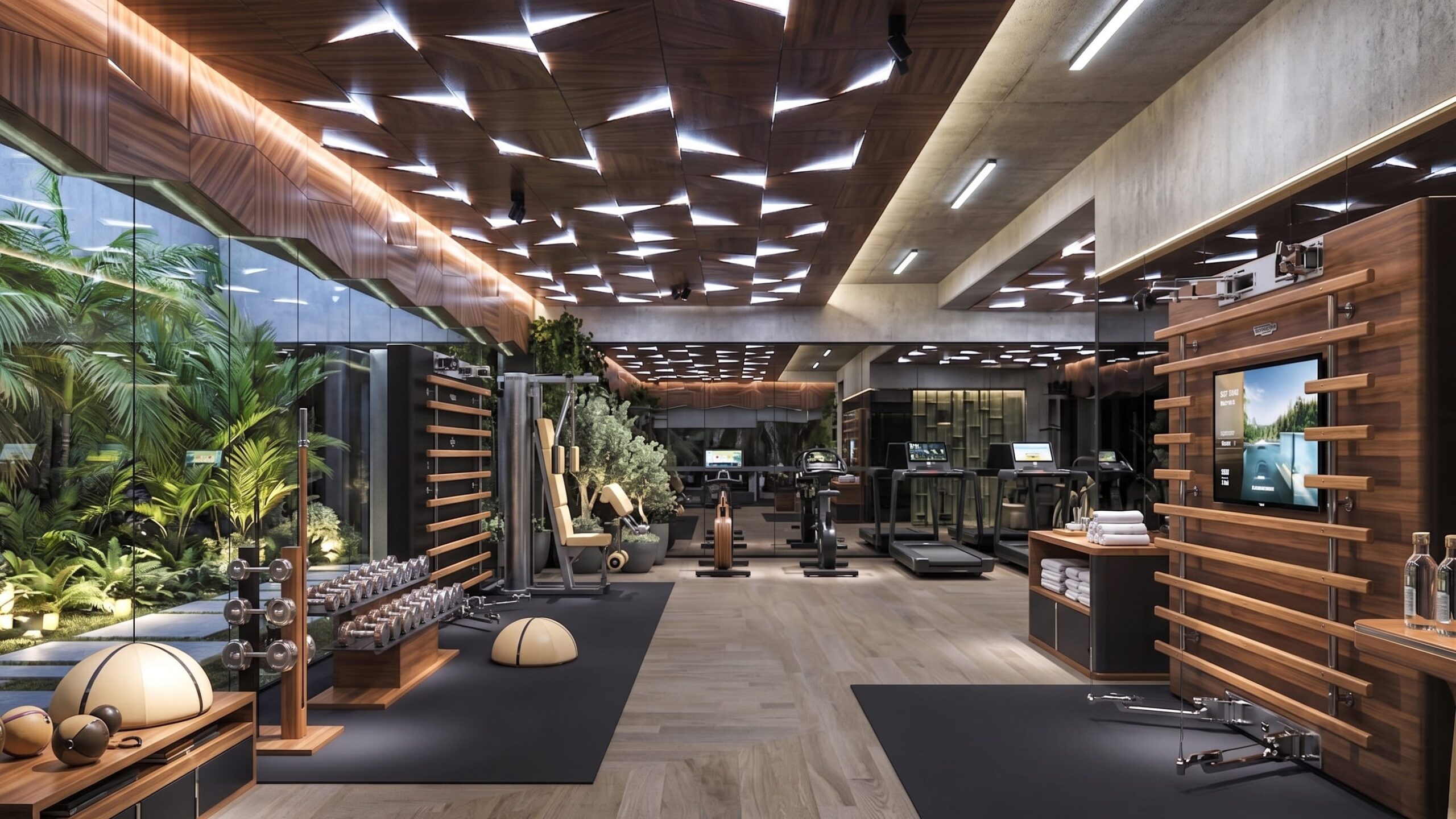
The Psychology of Space: Where Does the Real Mistake Hide?
One of the most common planning mistakes is allocating the luxury villa gym to a basement or secondary room simply because it is available.
Although practical on paper, these spaces often lack daylight, generous proportions and fresh air — all elements that strongly influence how people experience physical activity.
This does not mean lower-ground gyms should be avoided.
Many outstanding private gym design projects in luxury villas are located below ground. The key is to design them intentionally rather than treating them as leftover space. Proper ceiling heights, fresh-air ventilation, carefully balanced lighting and strong visual features can completely transform the atmosphere. Nature-inspired artwork, illuminated walls and architectural lighting help create an environment that feels open and welcoming despite the absence of large windows — an approach that is fundamental to every successful luxury basement design.
Ultimately, it is not the location that determines whether a gym will be used. It is the experience the space creates.
The Secret to Motivation: Views, Light and Biophilic Design
A successful luxury home gym is about far more than premium equipment. It should feel inviting enough that exercise becomes a natural part of everyday life rather than another task on the schedule. Thoughtful home gym design shapes that experience from the very beginning.
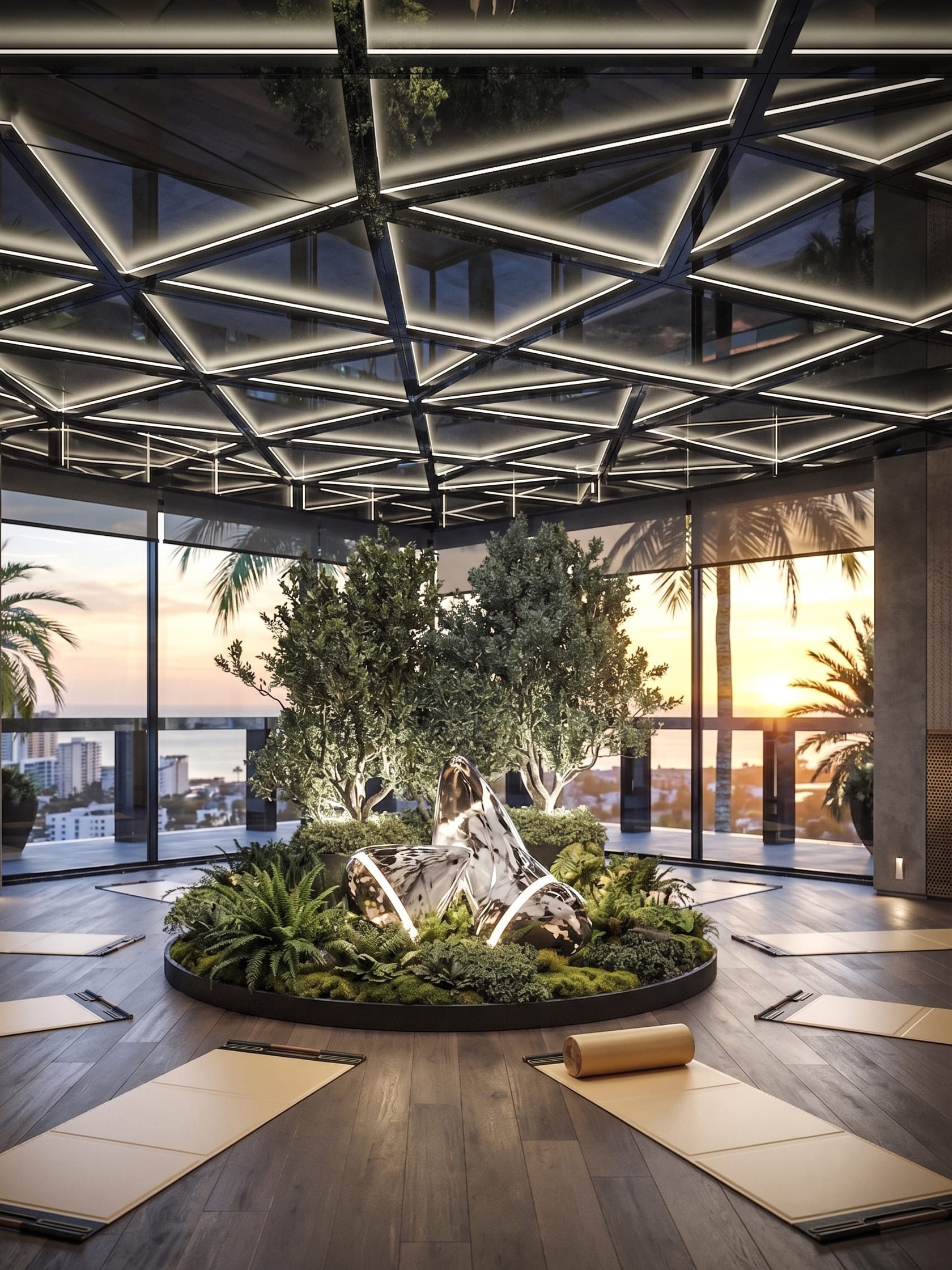
A View That Keeps You Moving
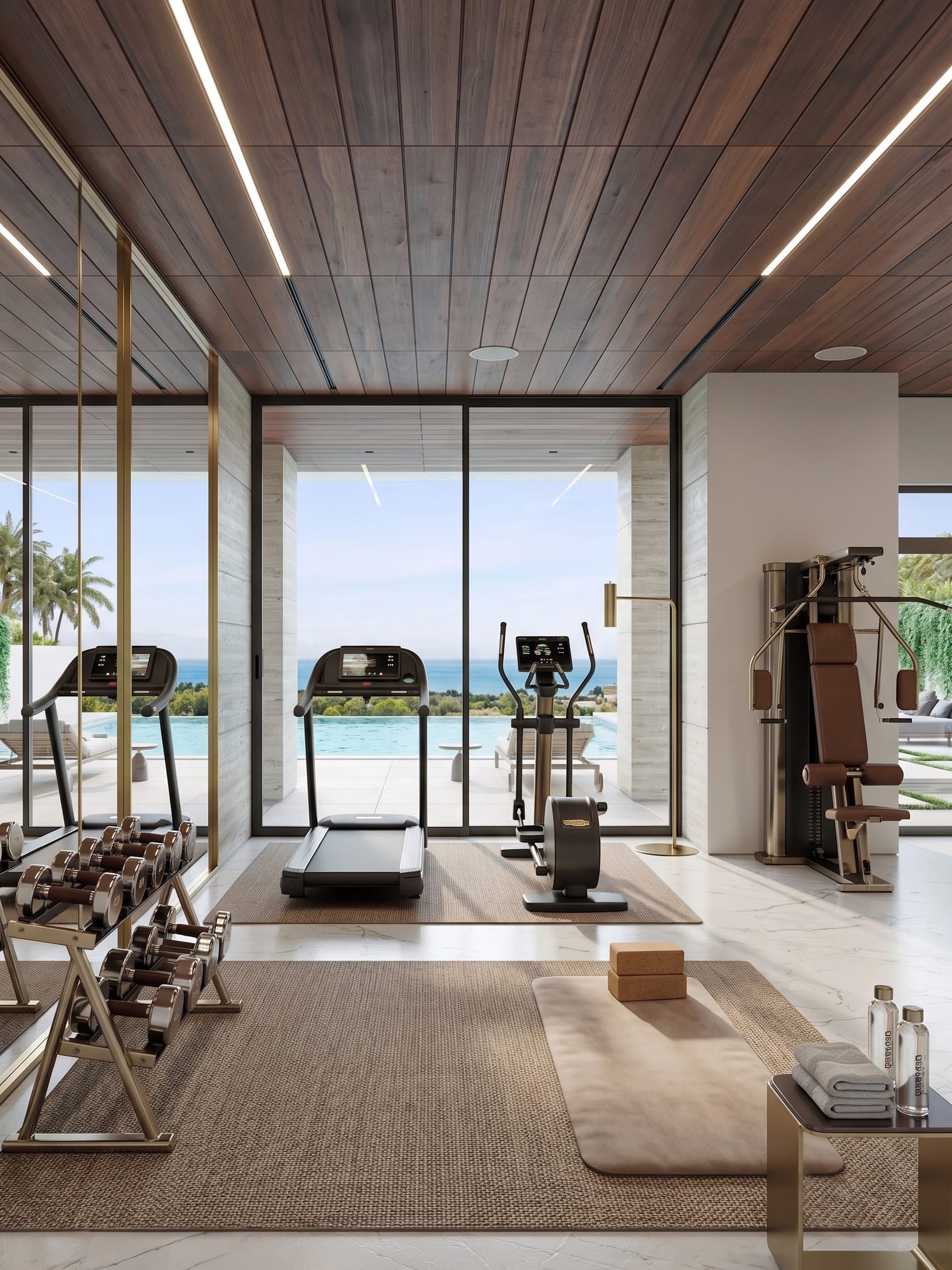
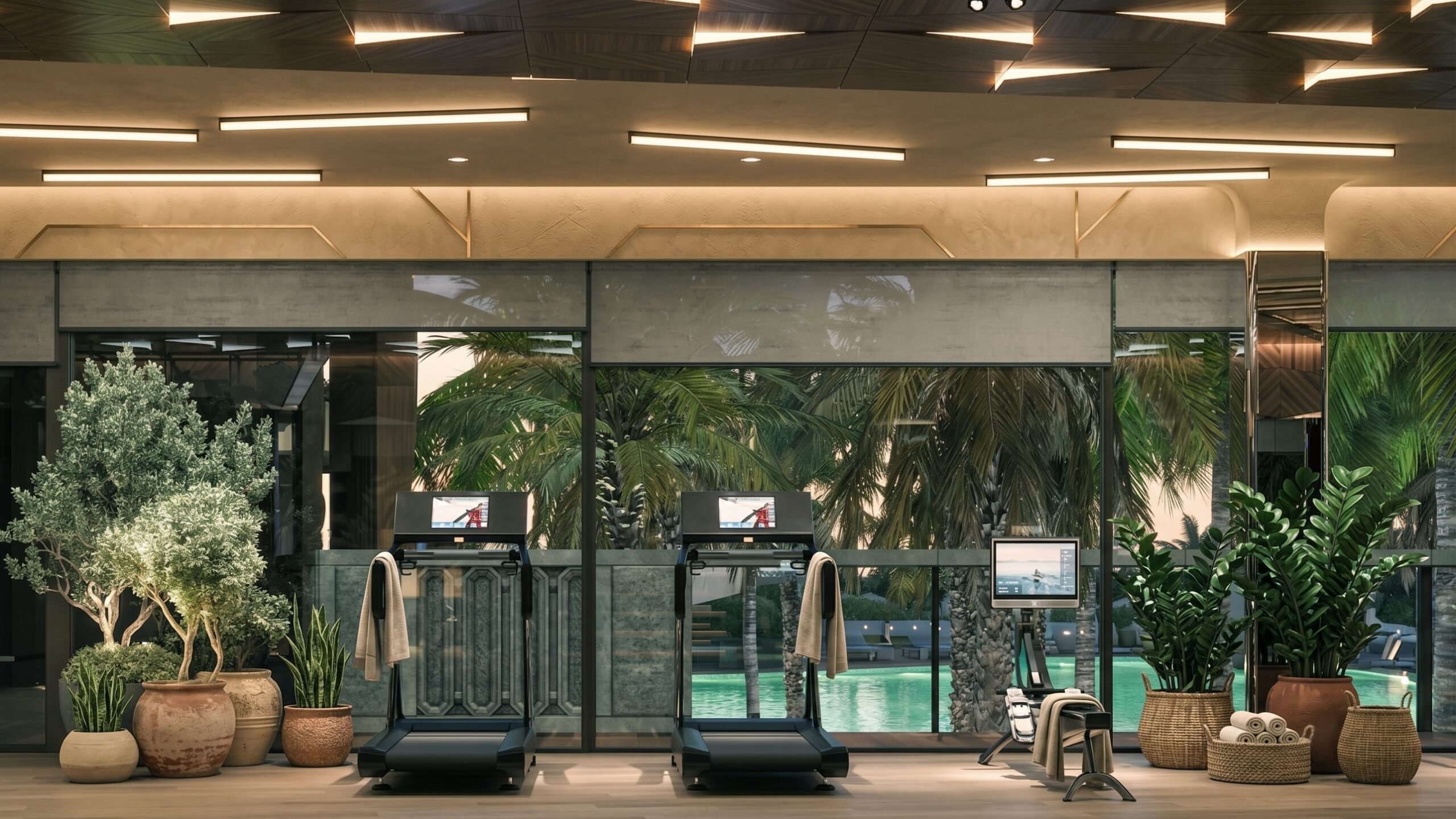
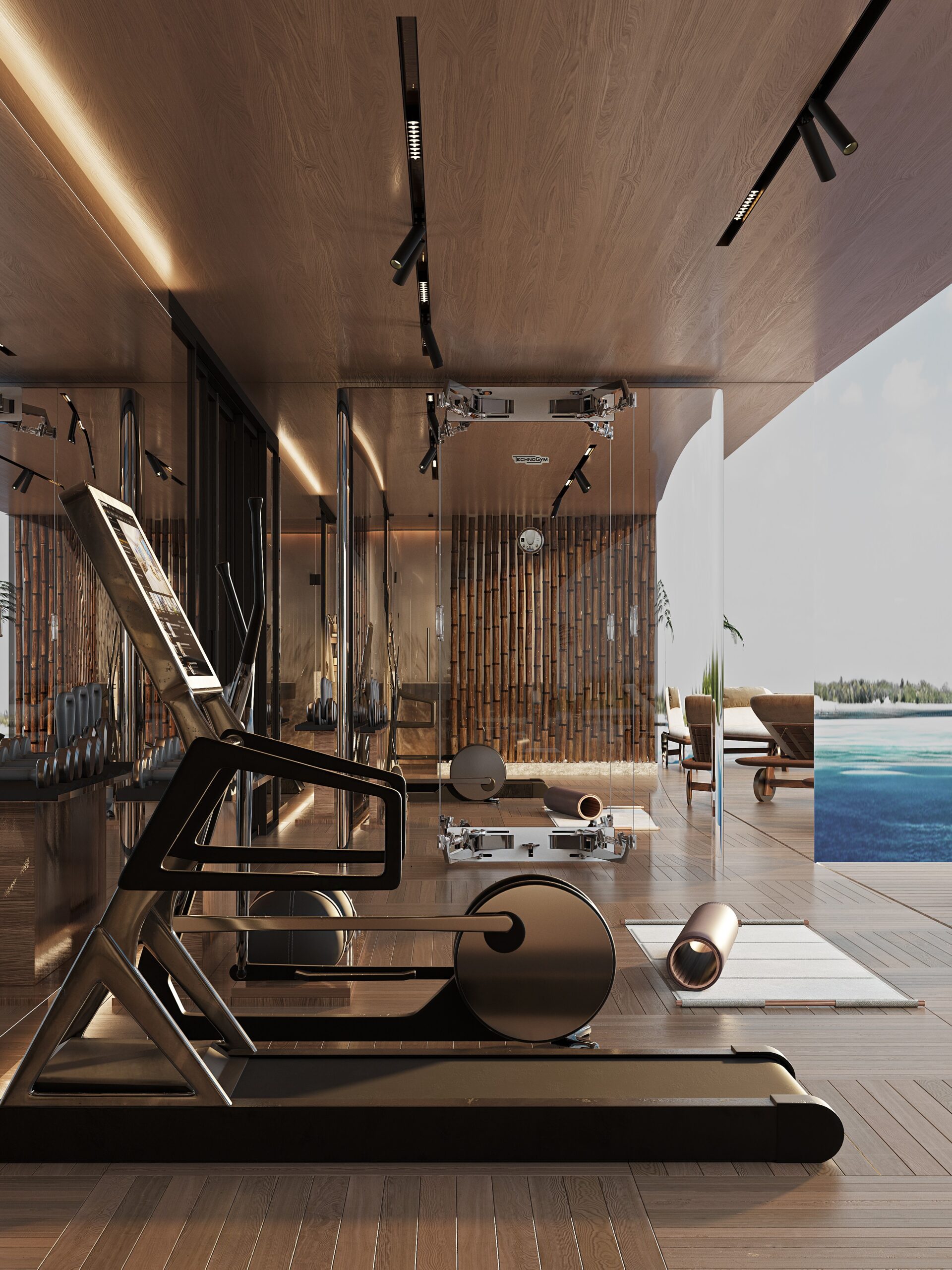
Whether you’re running, cycling or rowing, your attention naturally shifts towards what’s in front of you. A view overlooking landscaped gardens, water features or Dubai’s skyline makes cardio sessions feel noticeably more engaging.
This reflects one of the key principles of biophilic design: maintaining a visual connection with nature helps reduce stress and improve wellbeing. Where panoramic glazing isn’t possible, large-scale artwork inspired by nature, green walls or illuminated decorative panels can achieve a similar emotional effect.
Lighting That Works With Your Body
Blinding office-style ceiling lighting is rarely the best solution for a home gym, particularly when it shines directly into your eyes during strength training or floor exercises.
Instead, different activities benefit from different lighting scenarios. Cooler daylight tones create energy for morning workouts, while softer, warmer lighting supports stretching, yoga and recovery later in the day.
This approach not only improves comfort but also works in harmony with the body’s natural circadian rhythms.
Smart Zoning and Ergonomics
Avoid filling every available square metre with equipment. The room should still feel spacious.
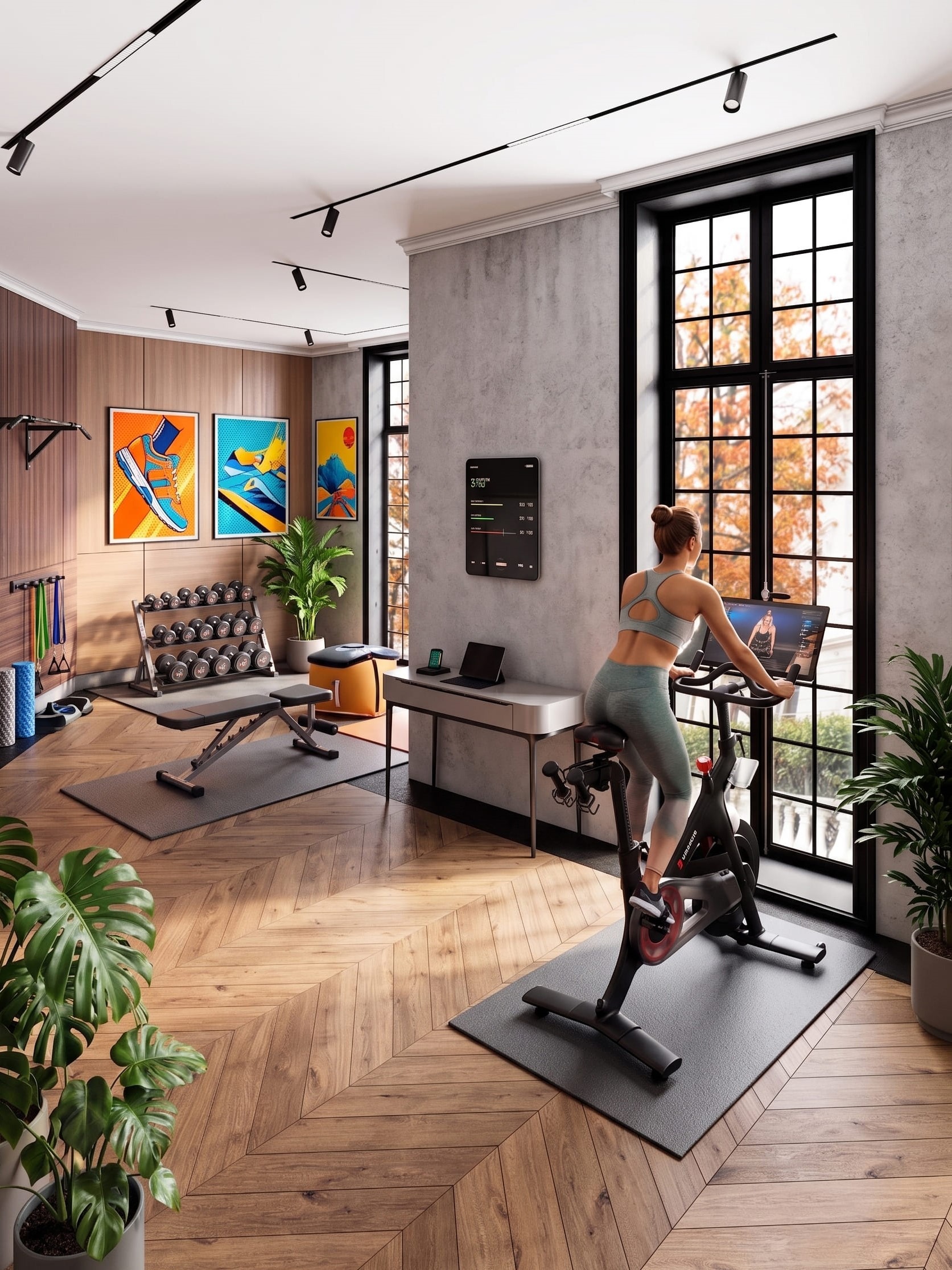
Divide the gym into three distinct areas:
- Cardio zone (treadmill, rowing machine or bike) — ideally facing a window or media wall.
- Strength zone (modular systems and free weights) — with mirrors positioned to help monitor technique.
- Recovery / Mind & Body zone (stretching area, TRX and, where appropriate, a percussion massage corner) — designed for relaxation and recovery.
Once these areas are defined, comfort becomes equally important. Generous circulation space, efficient fresh-air ventilation and intuitive equipment placement all help create a gym that people genuinely enjoy returning to.
Choosing Equipment That Complements the Design
Fitness equipment is no longer viewed simply as a collection of machines. In a modern luxury home gym, it becomes part of the overall living environment, making it just as important to consider how it fits within the space as how it performs during training.
Functionality should always remain the priority. Equipment needs to support the way you train, provide long-term reliability and make everyday workouts enjoyable. When these qualities are paired with thoughtful design, the fitness room feels like a natural extension of the home rather than a separate technical space.
Today, an increasing number of manufacturers are following this philosophy, bringing together professional performance, advanced technology and carefully considered aesthetics. Brands such as Technogym, NOHrD and Pent Fitness are good examples of this approach, offering extensive collections for residential and professional fitness spaces. Ultimately, the right choice is the equipment that best suits your training goals, lifestyle and the way your space is designed.
A Great Workout Doesn’t End with the Last Exercise
Today’s luxury home gyms are increasingly designed as part of larger wellness spaces. Rather than focusing solely on exercise, homeowners are creating environments that support both performance and recovery.
Saunas, steam rooms, cold plunge pools, massage areas and dedicated stretching spaces are becoming natural extensions of the fitness room. Together, they encourage a healthier daily routine while making the overall experience more enjoyable and sustainable.
When fitness and wellness are planned together from the very beginning, they become part of a lifestyle rather than separate features within the home.
Designing Superyacht Gyms That Support a Luxury Lifestyle
For owners who spend weeks or even months on board, a superyacht gym has become an essential part of modern yacht design rather than an optional feature. It allows health, performance and wellbeing to remain part of everyday life, regardless of where the journey leads.
Unlike residential projects, a gym on a superyacht must respond to strict technical requirements. Weight distribution, equipment fixing, vibration, marine-grade materials and efficient ventilation all influence the final design. Every element has to perform reliably without compromising comfort or the overall interior concept.
Flexibility is equally important. Carefully selected equipment often delivers more value than filling the room with numerous machines. Open circulation space, natural light where possible and a clear visual connection with surrounding areas help transform the gym into a place people genuinely enjoy returning to.
Increasingly, these fitness rooms are planned as an integral part of the overall yacht interior design. They are often located close to the beach club, where recovery lounges, saunas, steam rooms and cold plunge areas create a seamless transition between training, recovery and relaxation.
A successful superyacht gym is therefore measured not by its size, but by how naturally it fits into everyday life on board and how easily it supports long-term healthy routines.
OLT DESIGN Insight
A successful luxury home gym is never defined by the number of machines it contains. Its real value lies in how naturally it becomes part of everyday life.
Experience has shown us that consistency doesn’t come from motivation alone. It comes from creating an environment where people genuinely enjoy spending time. Thoughtful planning, natural light, ventilation and carefully selected equipment all play an important role in making that happen.
The most successful fitness spaces are the ones people continue using long after the excitement of moving into a new home has passed. That is the difference between designing a room for exercise and designing a space that supports a healthier lifestyle for years to come.