Luxury kitchens in Dubai: smart functionality with Middle Eastern soul
The modern kitchen has evolved far beyond a space for cooking. In Dubai, it has turned into a personal statement, a luxurious interior crafted with the precision of architecture and the intimacy of private living. Here, a kitchen is not merely a room. It’s a stage for hosting, a display of taste, and an extension of lifestyle. The city’s design culture blends world-class innovation with local heritage, resulting in a unique aesthetic that is distinctly Dubai: refined, high-tech, and warm with Middle Eastern character.
As the city continues to expand with new luxury residences, from beachfront villas on the Palm Jumeirah to sky-high penthouses overlooking the Marina, one thing stands out consistently — kitchens are becoming works of art. They feature rare natural stone, seamless built-ins, smart home integration, and subtle nods to local craft traditions. The result is a fusion that feels at once global and regional. This is the essence of luxury kitchens in Dubai, which is renowned for its minimalist form, opulent materials, and emotionally layered cultural details.
What defines modern luxury kitchens in Dubai?
High-end kitchen design in Dubai revolves around the balance of engineering and artistry. Today’s homeowners expect spaces that perform flawlessly, look elegant, and support both private cooking and professional catering. A modern kitchen is judged not only by finishes, but also by how intelligently it works with daily routines. These are the key elements that set modern kitchen design in Dubai apart from other global trends.
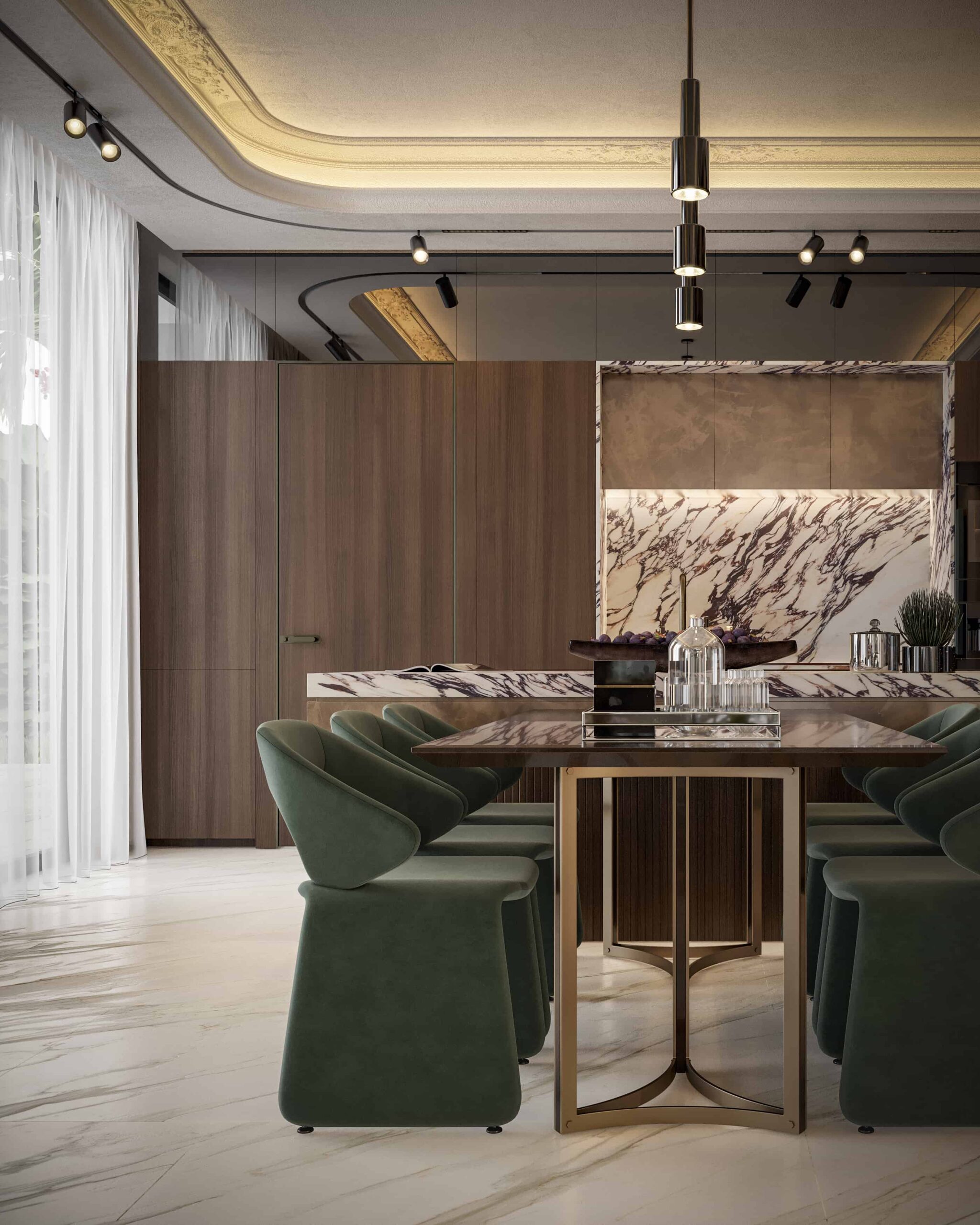
Sculpted natural stone
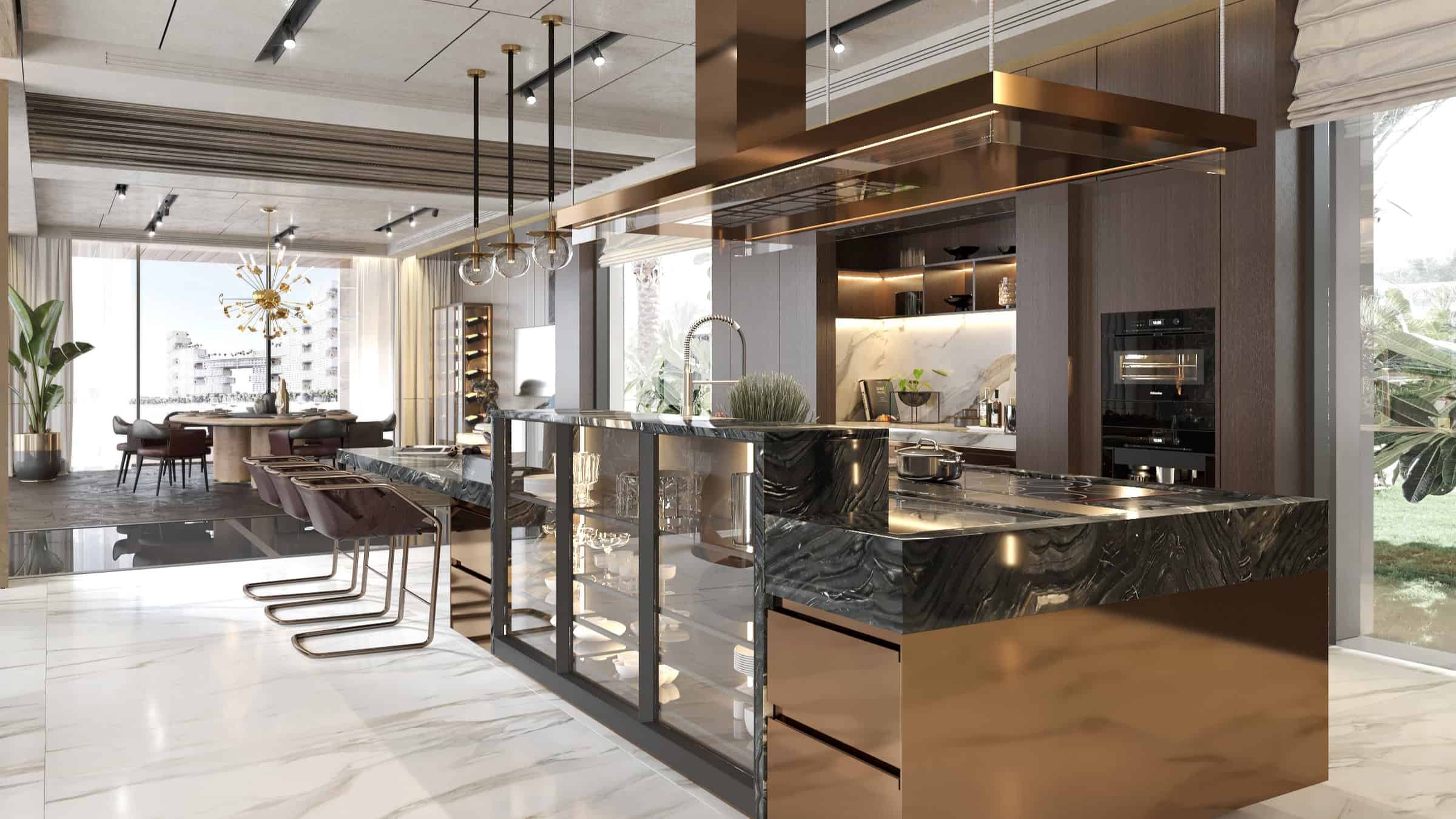
Marble, quartzite, limestone, travertine, and onyx are some of the most sought-after materials. Designers often treat stone as architecture rather than cladding. Instead of simple slabs, countertops are carved with thick, monolithic edges. Backsplashes become full-height installations, and islands take the form of sculptural blocks with waterfall surfaces. The goal is to make natural stone the hero of the composition.
Hidden technology and seamless integration
Luxury appliances are often invisible. Ovens, cooling systems, filtration modules, and even extractors are fully integrated into cabinetry. Rather than showcasing technology, modern Dubai kitchens treat it like a backstage system — always present, but never distracting. The smooth visual flow of the room matters more than displaying equipment.
Cabinetry as architecture
Instead of decorative panels and visible handles, the design leans toward full-height doors, continuous lines, and cabinetry that blends into the overall architecture of the home. Storage is treated like a wall system, with channels for indirect lighting, recessed edges, and custom joinery that hides everything from pantry shelves to bar units.
Surfaces with true substance
Led by a shift away from glossy finishes, kitchens in Dubai now favor matte stone, textured metals, and deep-colored lacquers. These tones absorb light beautifully, giving the interior a more atmospheric quality. Rather than chasing visual shine, the luxury lies in tactile richness — surfaces you want to touch.
Together, these elements form a design approach that feels composed, meaningful, and exceptionally functional. It’s luxury expressed through restraint, material honesty, and creative craftsmanship.
European minimalism, reimagined for Dubai homes
Dubai’s love for contemporary European design is evident throughout its luxury interiors. Yet minimalism here isn’t cold. It takes cues from global aesthetics, then adapts them to the rhythm of life in the United Arab Emirates. The climate, hospitality culture, and architectural scale encourage a softer, warmer interpretation of clean lines.
Clean lines paired with desert-inspired colors
Instead of stark white interiors, kitchens lean toward sand tones, muted browns, warm greys, charcoal blacks, olive greens, and off-white stone. These colors reflect Dubai’s natural setting: dunes, desert twilight, rocky landscapes, and seaside cliffs. The result is minimalism with soul, inspired by local surroundings rather than abstract geometry.
Subdued finishes replace high gloss
For many years, glossy white kitchens defined modern luxury around the world. Today, matte lacquer, honed marble, natural timber, and brushed metal are preferred choices. These finishes provide understated beauty and soften sunlight, which is particularly intense in the UAE. They age gracefully and feel more grounded. Exactly the tone that modern kitchen design in Dubai aims for.
Functional storage that disappears
Luxury kitchens in Dubai avoid clutter at all costs. Professional-grade cooking requires serious storage capacity, yet none of it is allowed to interrupt the visual calm of the room. Designers use tall systems, internal drawers, sliding modules, and hidden pantries to keep everything invisible. The kitchen looks serene, while behind the scenes, it functions like a well-equipped gourmet workspace. This mixture of European restraint and local warmth leads to an aesthetic that is minimal but not sterile. It is a design language that respects both Touches of Arabic identity in luxury kitchen design
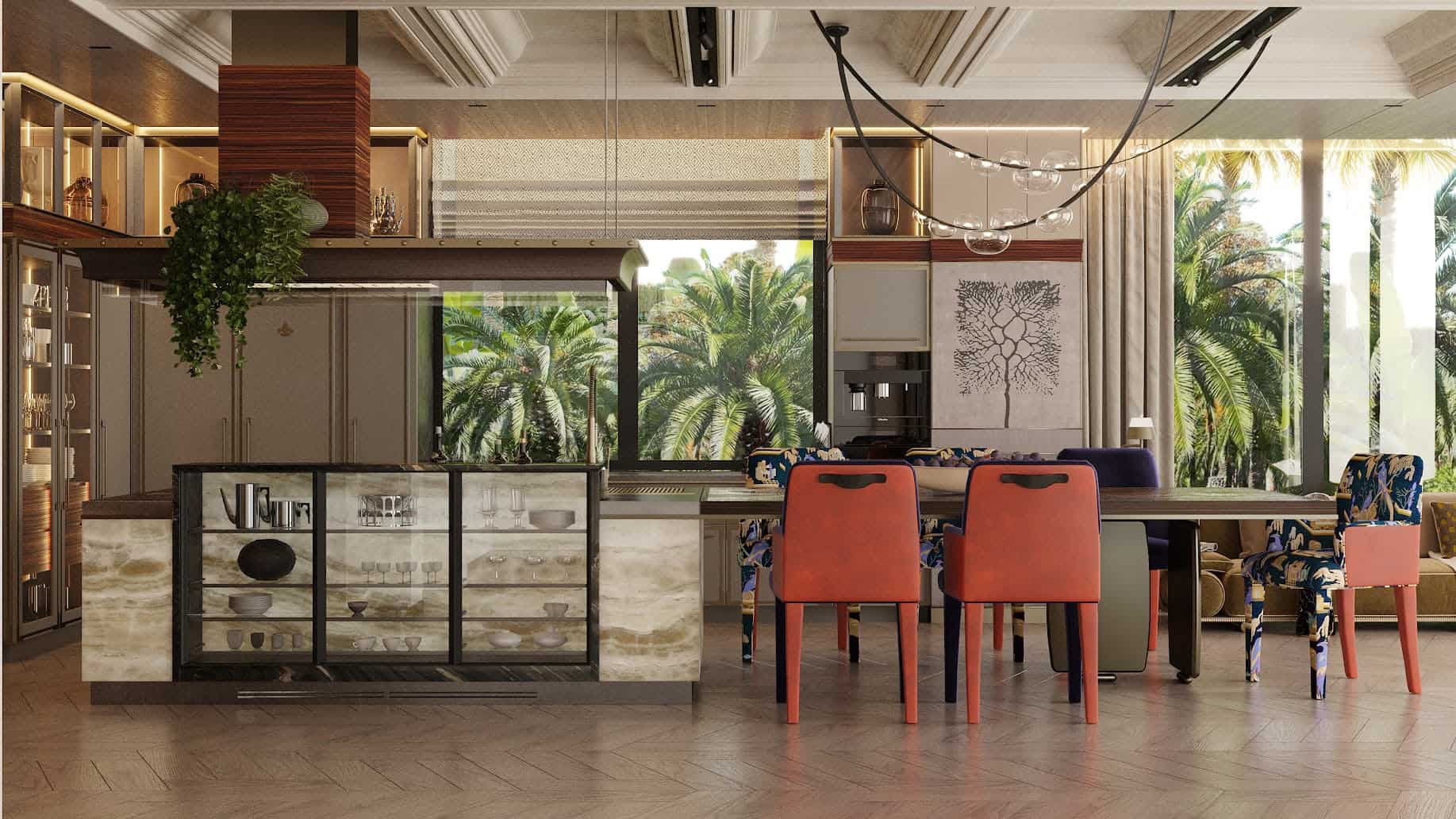
Dubai might embrace global aesthetics, but its soul remains deeply connected to Middle Eastern heritage. The most memorable kitchens take small cultural gestures and reinterpret them in a modern vocabulary. These subtle references give interiors authenticity and meaning.
This is where the Arabic-style kitchen in the UAE stands apart from typical international luxury. It’s not defined by ornate decoration; instead, it draws inspiration from geometry, craftsmanship, and the poetry of space.
Mashrabiya influence in cabinetry
Mashrabiya lattice patterns are iconic in Islamic architecture. In contemporary kitchens, the pattern appears in:
- metal grilles over glass display cabinets
• side panels of islands
• perforated ventilation covers
• sliding screens separating the dining area
Instead of heavy carving, the treatment is light and abstract, like a whisper of heritage within a modern composition.
Warm metals with historical roots
Arabic-inspired kitchens often use brass, bronze, or burnished gold — not as flashy accents, but as soft, aged metals. Handles, faucets, edge trims, pendant lights, or vent grilles may incorporate these finishes. The tone is less about sparkle and more about depth, echoing traditional craftsmanship.
Natural stone evokes the region’s landscape
Desert stones, earthy quartzite, and dark marble reminiscent of night skies are commonly used. Their textures and veins mirror natural scenery. Stone becomes a storytelling element, giving the kitchen a sense of place. When used thoughtfully, heritage isn’t nostalgia. It is an identity. This approach ensures that high-end kitchens feel connected to Dubai rather than copied from anywhere else.
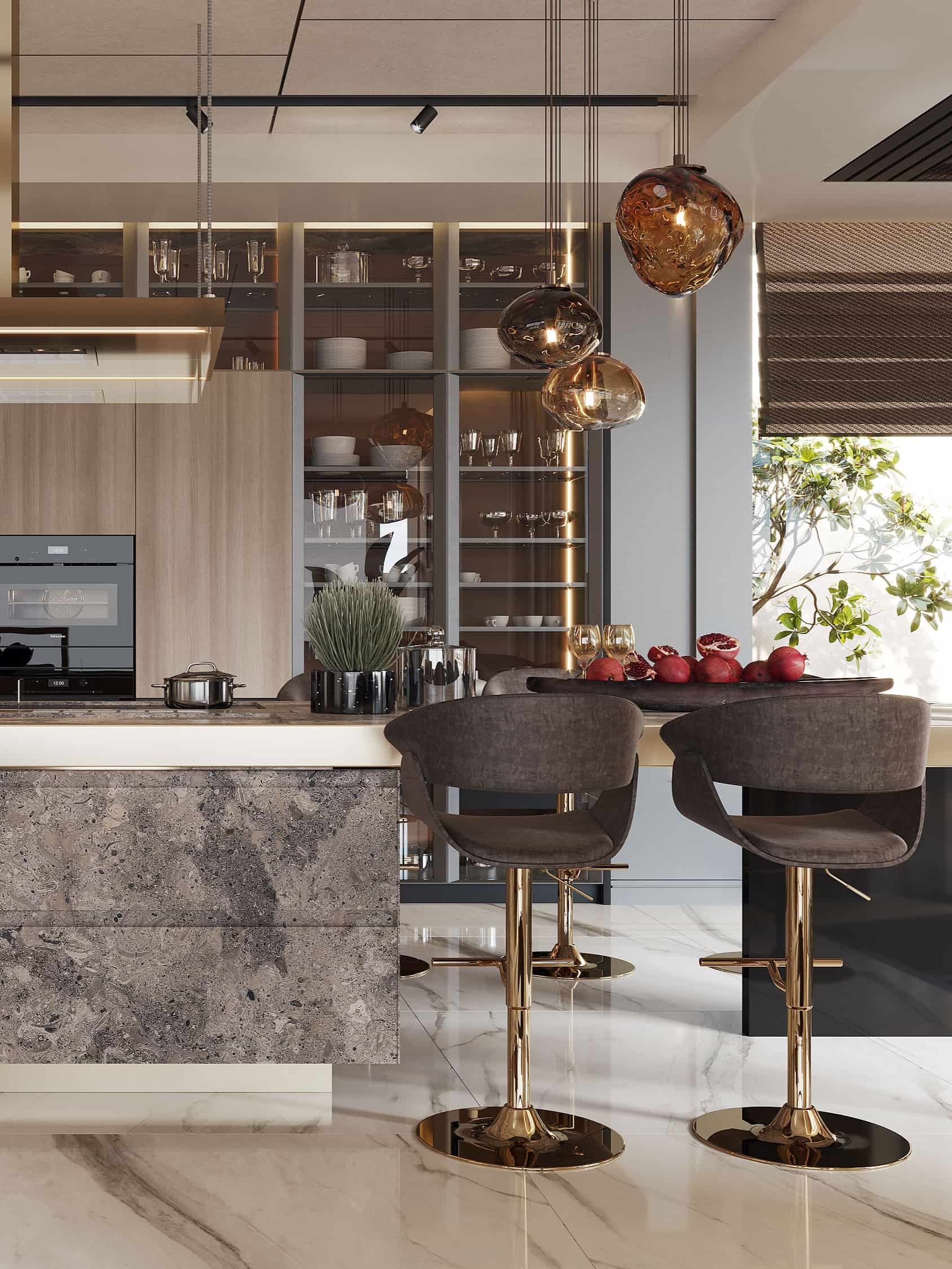
Smart kitchen technology for high-end Dubai homes
Dubai embraces technology faster than most global markets. Smart systems are now a basic expectation in premium interiors, but in high-end kitchens, they’re integrated so discreetly that they almost disappear.
Invisible intelligence
Lighting, ventilation, water purification, and refrigeration can be controlled through touch panels or mobile apps. Many kitchens include:
- motion-sensor lighting beneath counters
• smart faucets with temperature memory
• remote-controlled extraction units
• integrated food management systems
These solutions enhance daily life without drawing attention.
Automated lighting ambience
Indirect lighting is used to create scenes rather than illumination. Under-cabinet strips, base plinth lighting, and island backlighting can shift from bright cooking mode to ambient entertaining mode with a single tap. The kitchen becomes part of the home’s mood, not just a workspace.
Technology supporting wellness
As Dubai becomes more health-focused, kitchens are designed to support clean eating and hydration. Smart filtration, air-circulating storage, and cooking appliances with built-in health programming are increasingly common. The meaning of luxury has shifted. Convenience alone is not enough; it must serve lifestyle and wellbeing.
Storage designed for grand living spaces
Luxury homes in Dubai often include multiple kitchen zones: a show kitchen for hosting and a more functional back kitchen for preparation. This allows homeowners to entertain lavishly without revealing the technical side of cooking. Many villas include a walk-in pantry that functions as a small prep station. It may house a second sink, cooling unit, or dishwasher. Storage is designed vertically with adjustable systems to maximize space and keep surfaces clean.
Full-height storage walls are popular as well, especially in penthouses where vertical lines enhance the scale of the space. Integrated lighting turns shelving into quiet displays, suitable for curated dinnerware or hospitality items. Furthermore, hospitality is at the core of Emirati culture. Display units with glass, metal frameworks, or stone plinths are used to showcase elegant table sets, tea services, or artisan pieces. This reflects the importance of hosting and gathering.
Open kitchen concepts in Dubai penthouses
While villas might separate prep and guest areas, penthouses embrace openness. With skyline views and expansive living rooms, kitchens become social centers. The island isn’t just a workstation; it becomes a place to talk, serve drinks, or watch food being prepared. Its design is bold, sculptural, and positioned strategically like a piece of furniture.
Lighting that shapes interaction. Pendant lighting, recessed channels, and hidden LEDs highlight gathering areas. Soft pools of light draw people in and create an inviting environment. Materials that echo architecture. Polished stone that reflects night skyline lights, metal trims that echo urban structures, and dark cabinetry that links to panoramic windows give the kitchen a cosmopolitan feel. Penthouses aim to blur the line between cooking and living, creating a seamless social experience.
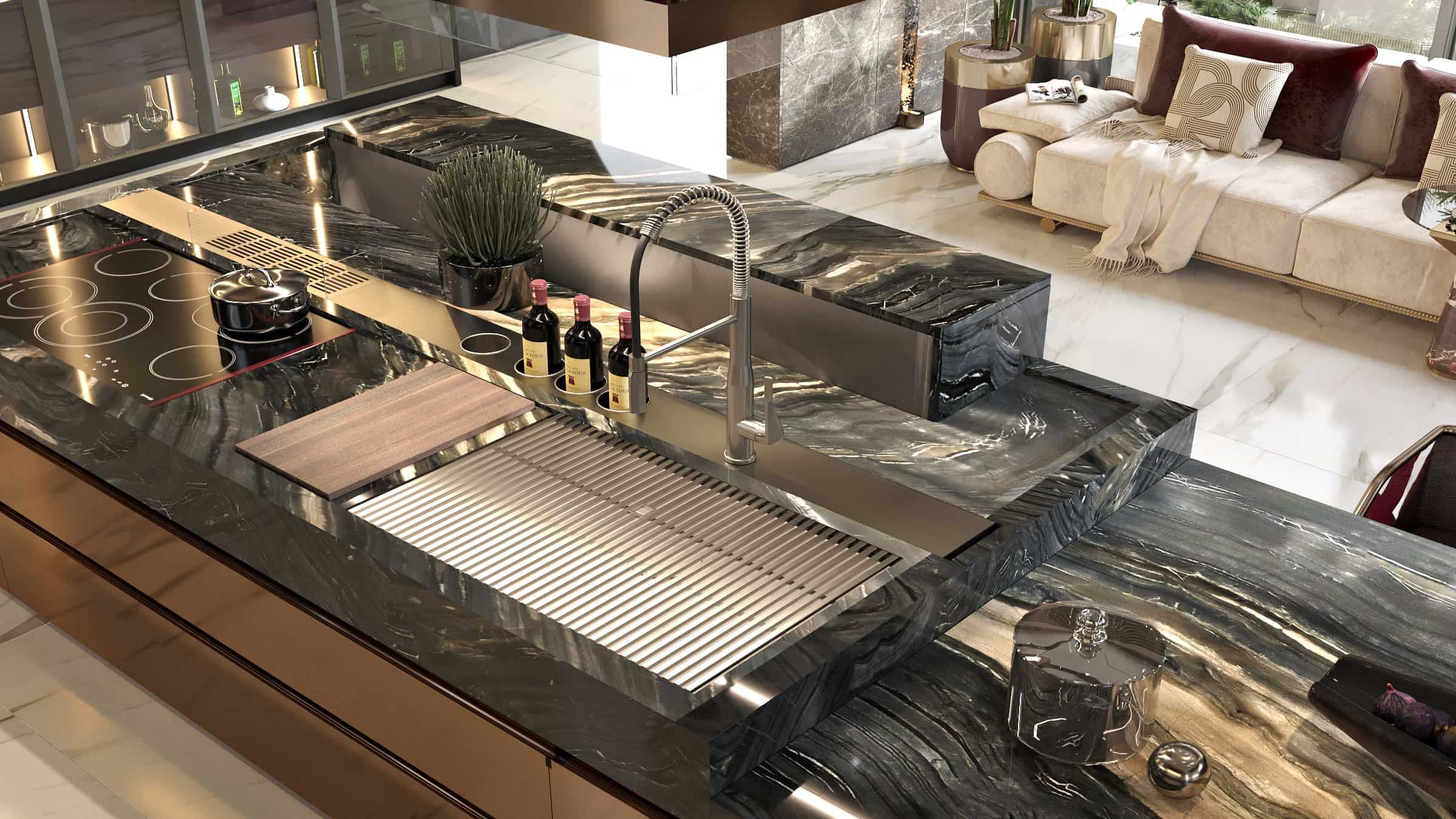
Dubai’s luxury kitchens blend the future with tradition. They celebrate global innovation while staying rooted in local identity. Smart systems support wellness, architecture defines storage, and natural stone becomes the core of the aesthetic. Most importantly, cultural nuance is not treated as a theme; it’s a quiet, respectful tribute to place. The result is a kitchen that belongs to its home and reflects the people who live in it. These spaces feel sculptural yet inviting, grand yet intimate. They embody what design in Dubai continues to aim for: harmony between craftsmanship, technology, and spirit. A kitchen here is not just a product of trends. It is a personal landscape shaped with care.