Greenery and biophilic design in Dubai: how nature enters luxury interiors
Dubai is often described through extremes: scale, speed, ambition, and technology. It is a city where architecture defies climate, where glass and steel rise from the desert, and where interior environments are engineered to perfection. Yet within this controlled reality, a quiet shift has been taking place.
Nature is returning — not outside, but inside. Greenery in Dubai luxury interiors is no longer an accessory or visual statement. It has become a structural part of how spaces are conceived, experienced, and remembered. Biophilic design in Dubai reflects a deeper understanding of luxury: not as excess, but as balance. Not as domination over nature, but as coexistence with it.
In villas, penthouses, restaurants, hotels, and offices across the UAE, plants are being integrated into architecture itself. Walls become living surfaces. Courtyards turn inward. Interiors soften, breathe, and slow down. This is not decoration. This is design philosophy. Biophilic interiors are approached as environments where nature is not added at the end, but embedded from the very beginning.
Why biophilic design matters in the UAE
Biophilic design is rooted in a simple truth: humans have an innate need to connect with nature. In environments where nature is limited by climate, urban density, or lifestyle, this need becomes more pronounced. Dubai is a city of precision. Temperature is controlled, light is filtered, and sound is managed. While this creates comfort, it can also create emotional distance. Spaces become flawless, yet disconnected. Perfect, yet tiring. Greenery restores what technology alone cannot.
Indoor plants in Dubai interiors introduce irregularity — a softness that breaks rigid lines and polished surfaces. Leaves move slightly with the air. Shadows shift. Colors change subtly over time. These small, natural variations make interiors feel alive. In luxury contexts, this connection to nature is not a trend. It is a response to how people want to feel in their homes and workplaces: calm, balanced, grounded.
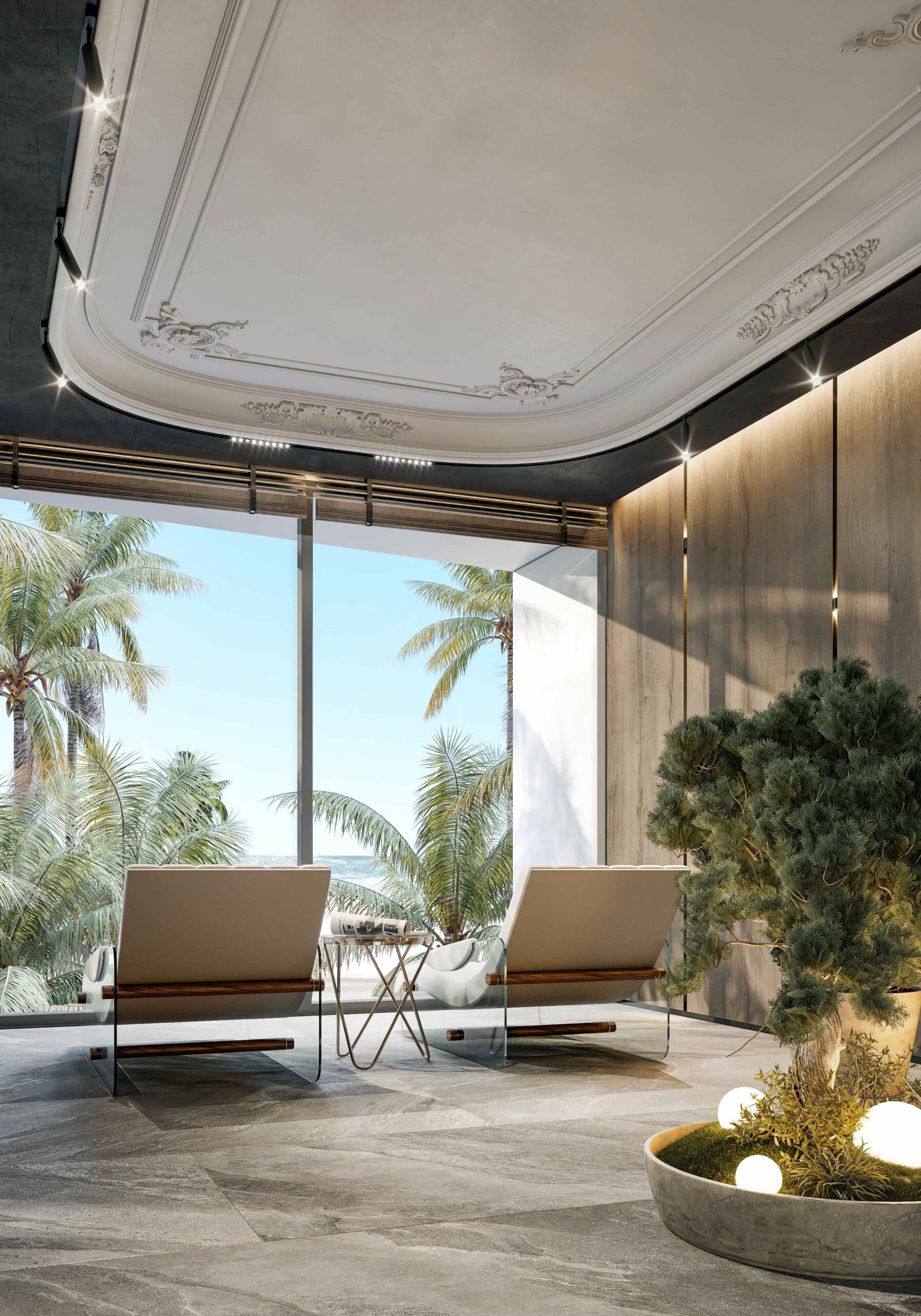
What biophilic design means in the Dubai context
Biophilic design in Dubai is not about copying tropical jungles or recreating European conservatories inside glass buildings. It is highly contextual, carefully considered, and deliberately restrained. In a city defined by precision and control, nature is introduced with the same level of intention as architecture itself.
The UAE climate demands discipline. Plants must survive indoors under constant air conditioning, artificial lighting, and controlled humidity levels. Because of this, biophilic design in Dubai is curated rather than abundant. Every element is chosen for long-term performance, not short-term visual impact. Key characteristics of biophilic design in Dubai include:
- architectural integration of greenery rather than surface decoration
- controlled and limited plant palettes
- strong emphasis on longevity, durability, and maintenance
- visual and material harmony with contemporary finishes
Plants are selected for resilience as much as aesthetics. Their placement is strategic, often shaping circulation, framing views, or defining zones instead of simply filling empty corners. This approach ensures that greenery feels intentional, sophisticated, and fully aligned with luxury interiors.
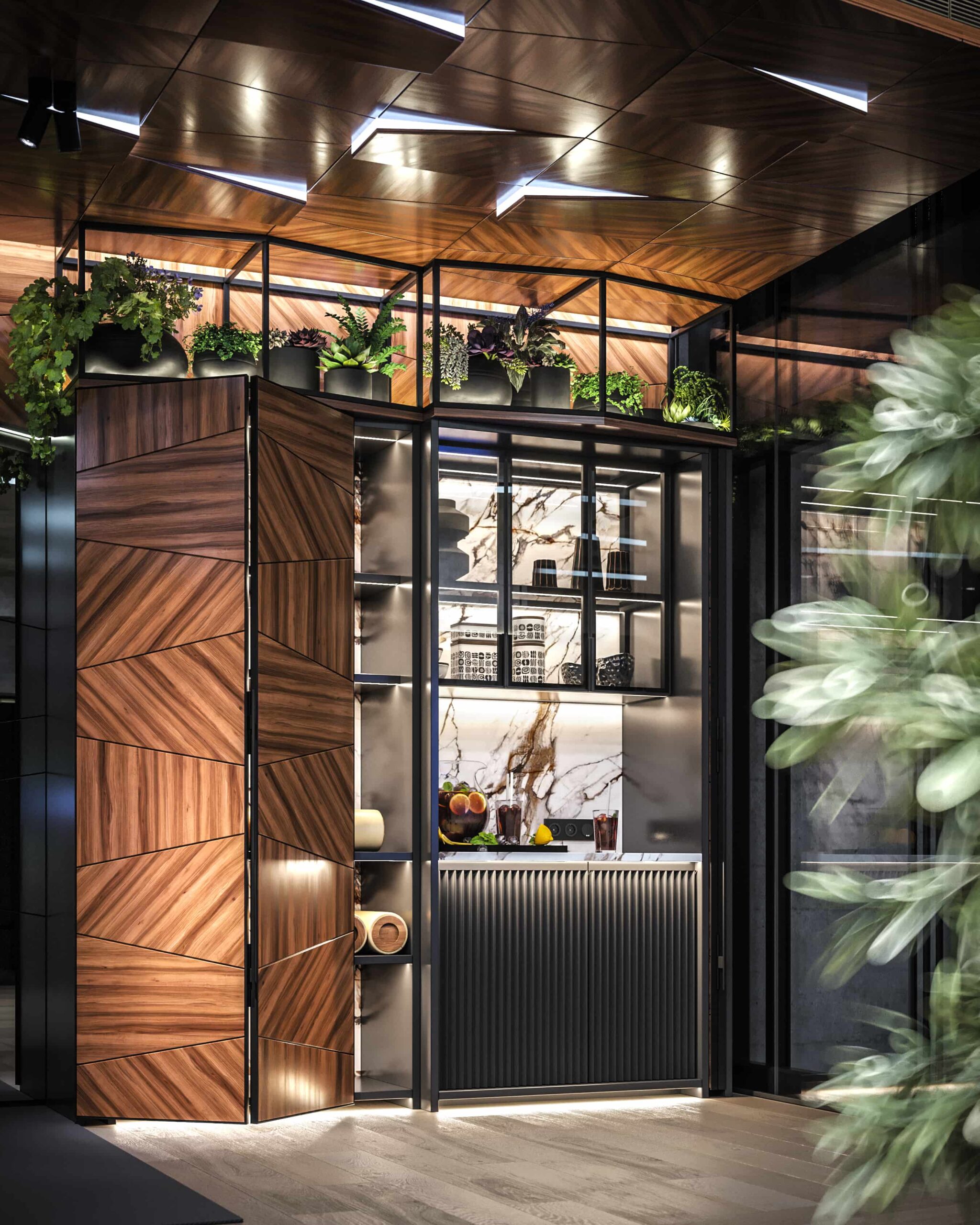
Green luxury interiors in the UAE: a new definition of sophistication
Luxury in the UAE has evolved significantly over the last decade. Once defined primarily by scale, materials, and spectacle, it is now increasingly measured by comfort, atmosphere, and emotional quality. Spaces are expected not only to impress, but to feel right.
Green luxury interiors in the UAE reflect this shift clearly. Nature introduces restraint into otherwise highly refined environments. It softens marble surfaces, balances metal and glass, and brings warmth to minimalist compositions without disrupting their clarity. Greenery also signals care for the space itself, for the people who inhabit it, and for the experience it creates. In high-end residential projects, biophilic design often appears in:
- double-height living rooms where greenery balances scale
- entrance halls and atriums that set an immediate tone
- spa and wellness areas designed for restoration
- private lounges and master suites focused on calm
These spaces feel quieter, more personal, and more human. These qualities increasingly define modern luxury in the UAE.
Green walls as architectural statements
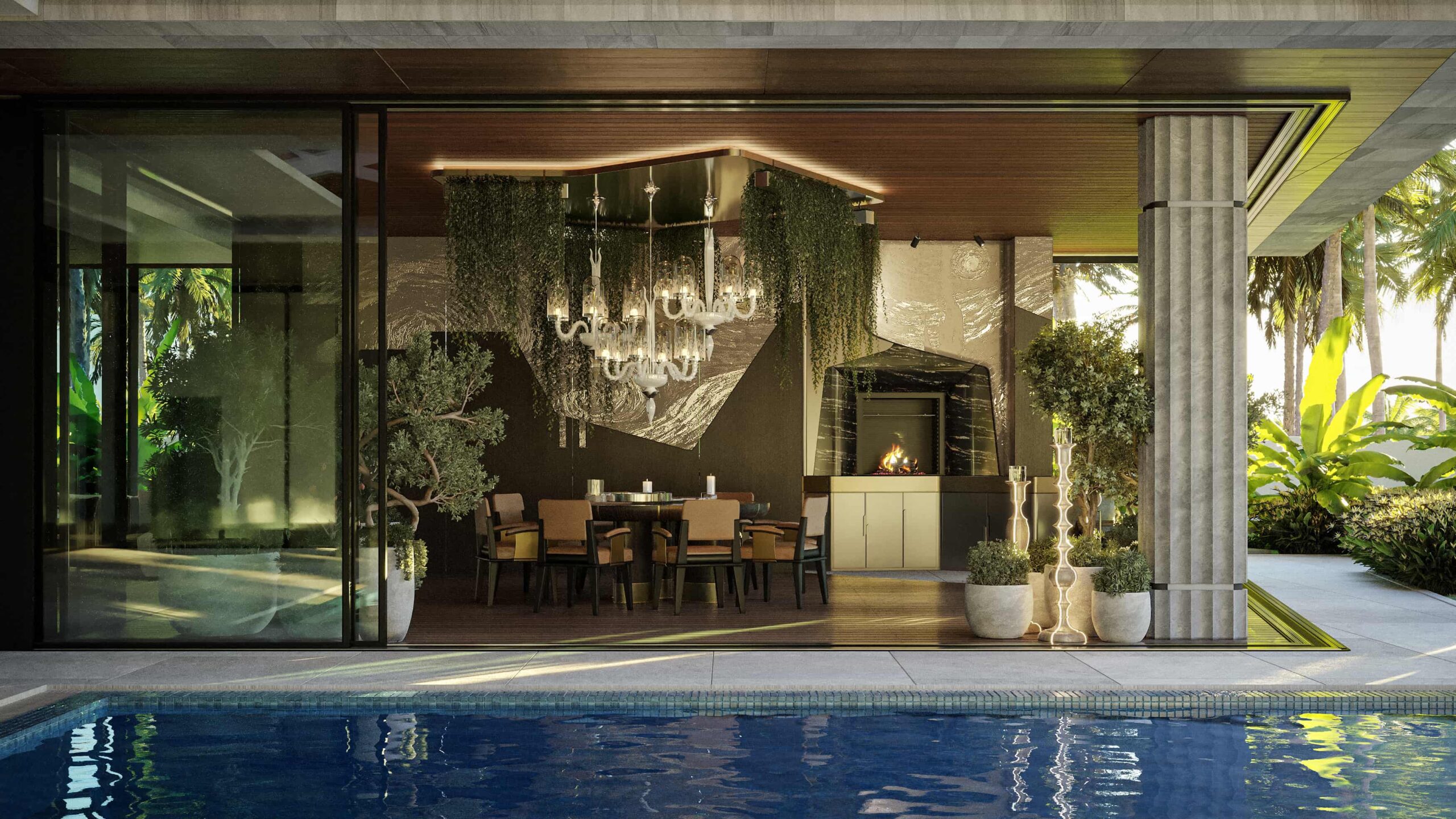
Green walls have become one of the most recognizable expressions of biophilic design in Dubai. When executed thoughtfully, they function as architectural elements rather than decorative panels or temporary features.
In luxury interiors, green walls often replace traditional feature walls or large-scale artwork. They introduce texture, depth, and subtle movement. As light changes throughout the day, foliage reacts, creating a living surface that never feels static.
In hospitality and commercial spaces, green walls also serve an important psychological function. They reduce stress, soften acoustics, and make large, open volumes feel more intimate and approachable. At the same time, successful biophilic design avoids overuse. Green walls are most effective when they are:
- proportionate to the scale of the space
- carefully integrated with lighting and surrounding materials
- supported by reliable irrigation and maintenance systems
Excessive or poorly planned greenery can quickly lose its impact. In luxury interiors, true sophistication lies in restraint.
Indoor plants in Dubai interior design
Indoor plants in Dubai interiors require a different mindset than in temperate climates. Here, less is often more. The focus is not on quantity, but on presence and placement. Luxury interiors tend to favor fewer, larger plants rather than many small ones. Sculptural botanical elements are used to define zones, guide movement, and create visual anchors within open layouts. Typical applications include:
- statement trees in the main living areas
- tall plants framing panoramic windows
- greenery integrated into shelving or bespoke furniture
- plants marking transitions between functional zones
This approach aligns with Dubai’s preference for clarity, scale, and visual calm, while maintaining a strong and legible biophilic presence.
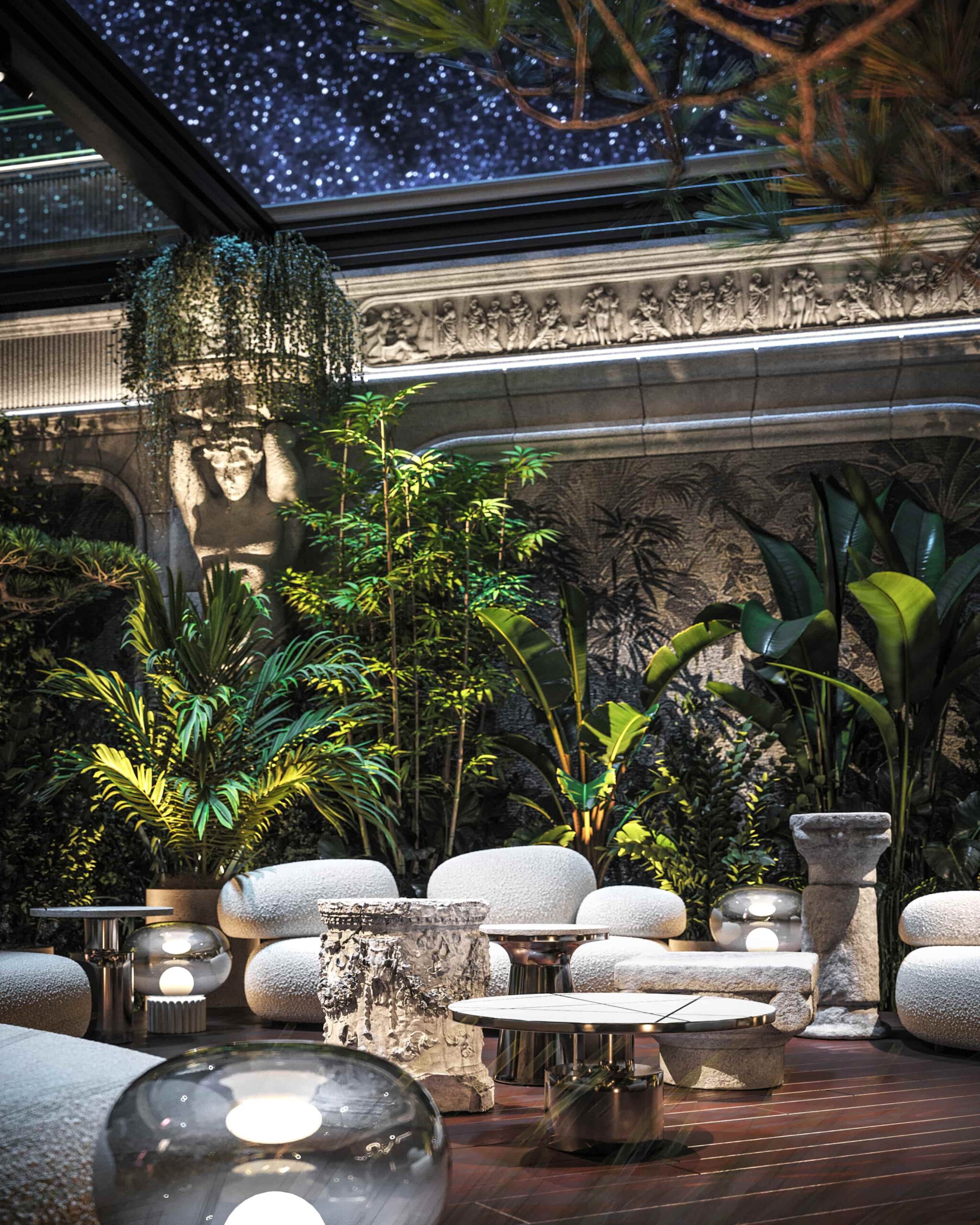
Winter gardens and indoor courtyards
One of the most refined expressions of biophilic design in Dubai is the indoor garden. These spaces represent a deeper level of architectural integration rather than surface-level greenery. Winter gardens, interior courtyards, and enclosed green zones allow nature to exist at the heart of the building without exposure to extreme outdoor conditions. They often become the emotional core of villas and large residences.
Such spaces introduce natural light deep into interiors, improve air circulation, and create visual connections between floors and rooms. In many projects, indoor gardens are visible from multiple vantage points, reinforcing a sense of continuity and openness. In luxury design, an indoor garden is not an addition or feature. It is a central spatial concept around which the home is organized.
Biophilic design in villas and private residences
In private villas, biophilic design enhances everyday living rather than making a single visual statement. Greenery is woven into daily movement and routine. Plants are often integrated into:
- entrance sequences that create a calm arrival
- staircases and vertical voids connecting levels
- bathrooms and spa areas focused on well-being
- bedrooms and private lounges designed for rest
These elements create moments of pause throughout the home. Instead of concentrating greenery in one area, it is distributed to support different parts of daily life. For residents, this means waking up to nature, moving through nature, and relaxing alongside it. All within a controlled and comfortable indoor environment.
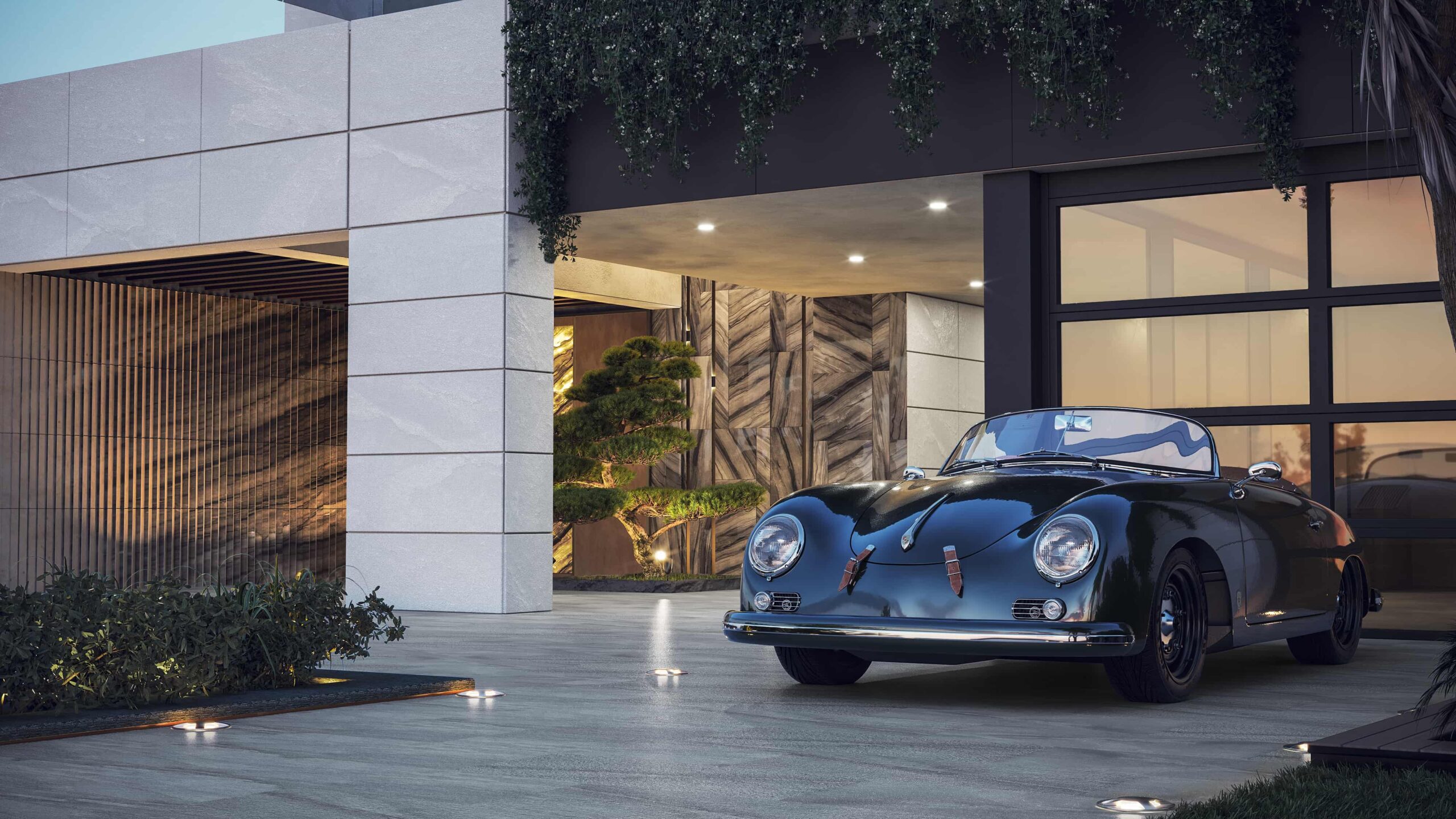
Biophilic interiors in restaurants and hospitality spaces
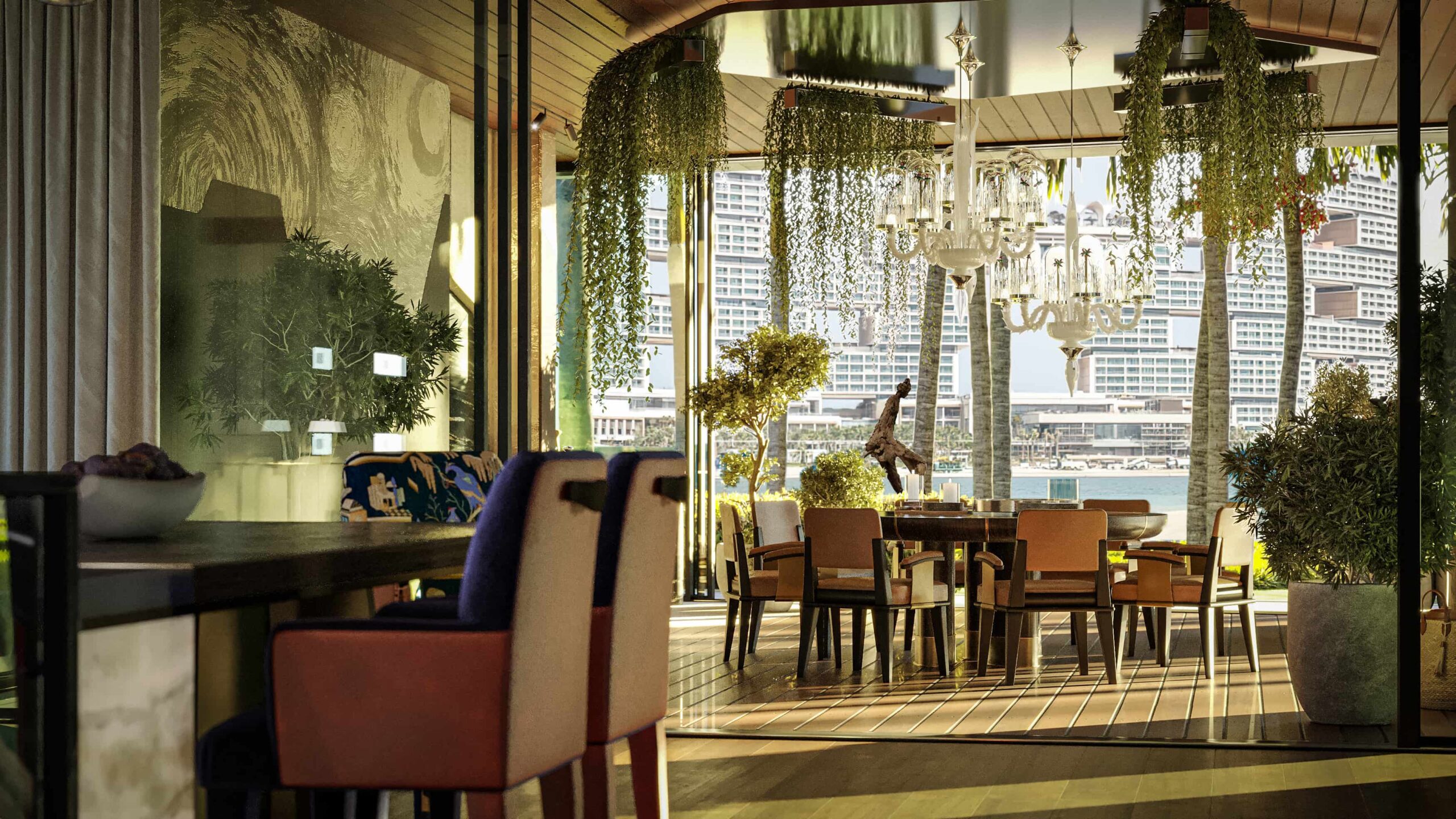
Dubai’s hospitality scene is highly competitive, and the atmosphere plays a decisive role in guest experience. Biophilic design has become a powerful tool in shaping that atmosphere. Restaurants, lounges, and hotels increasingly rely on greenery to define seating areas, soften acoustics, and introduce intimacy into large spaces. Nature helps break down scale without fragmenting the layout.
In luxury hospitality, greenery is no longer optional. It has become part of the emotional identity of the space. Ceiling installations, plant partitions, and living features transform interiors into immersive environments. Guests stay longer, feel more relaxed, and associate the space with comfort rather than spectacle.
Offices and commercial spaces: nature as performance
Biophilic design is also transforming commercial interiors in Dubai, where performance and well-being are increasingly linked. Corporate environments face growing pressure to support focus, mental clarity, and employee satisfaction. In response, greenery is being integrated into office layouts as a functional design element. Plants are introduced into:
- reception areas that shape first impressions
- meeting rooms where focus is required
- circulation zones that benefit from visual relief
- employee lounges and breakout spaces
These elements reduce stress, improve concentration, and create a more balanced work environment. In high-performance industries, this psychological benefit directly supports productivity.
Microclimate and comfort: beyond aesthetics
Biophilic design in Dubai is not only visual. It also plays a meaningful role in shaping healthier indoor microclimates. Plants help regulate humidity, improve air quality, and soften the perception of temperature. In a region where interiors rely heavily on air conditioning, this balance is essential for long-term comfort.
Greenery introduces a sense of freshness that mechanical systems alone cannot replicate. Spaces feel breathable rather than sealed, and environments feel more natural despite technological control. This is where biophilic design becomes a true bridge between comfort and technology.
Technology and nature: a delicate balance
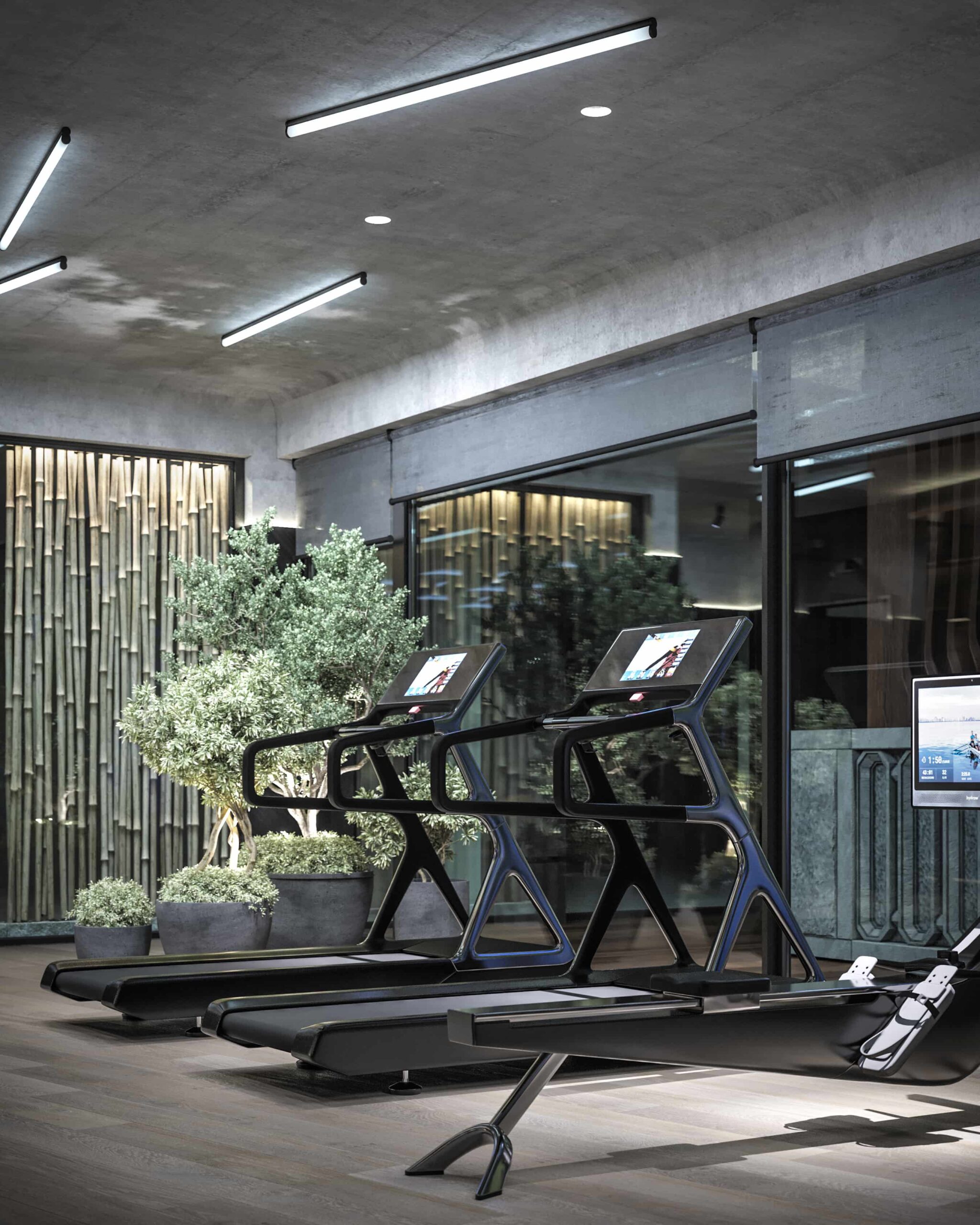
In Dubai, biophilic interiors depend on advanced technology to function successfully. Automated irrigation, specialized grow lighting, and climate control systems allow plants to thrive indoors throughout the year. However, the success of biophilic design depends on keeping this technology invisible. The experience must feel natural, effortless, and intuitive rather than engineered. Technology supports nature quietly, remaining behind the scenes. The result is an environment where greenery feels organic, balanced, and integral to the space but never forced.
Biophilic design in Dubai is not about recreating nature indoors. It is about restoring a sense of natural rhythm within highly controlled environments. Through greenery, light, and thoughtful integration, luxury interiors in the UAE are becoming calmer, more humane, and more emotionally engaging. In a city defined by innovation, biophilic design reminds us that nature is not a limitation but a foundation.