Residences with Helipads: Design and Integration
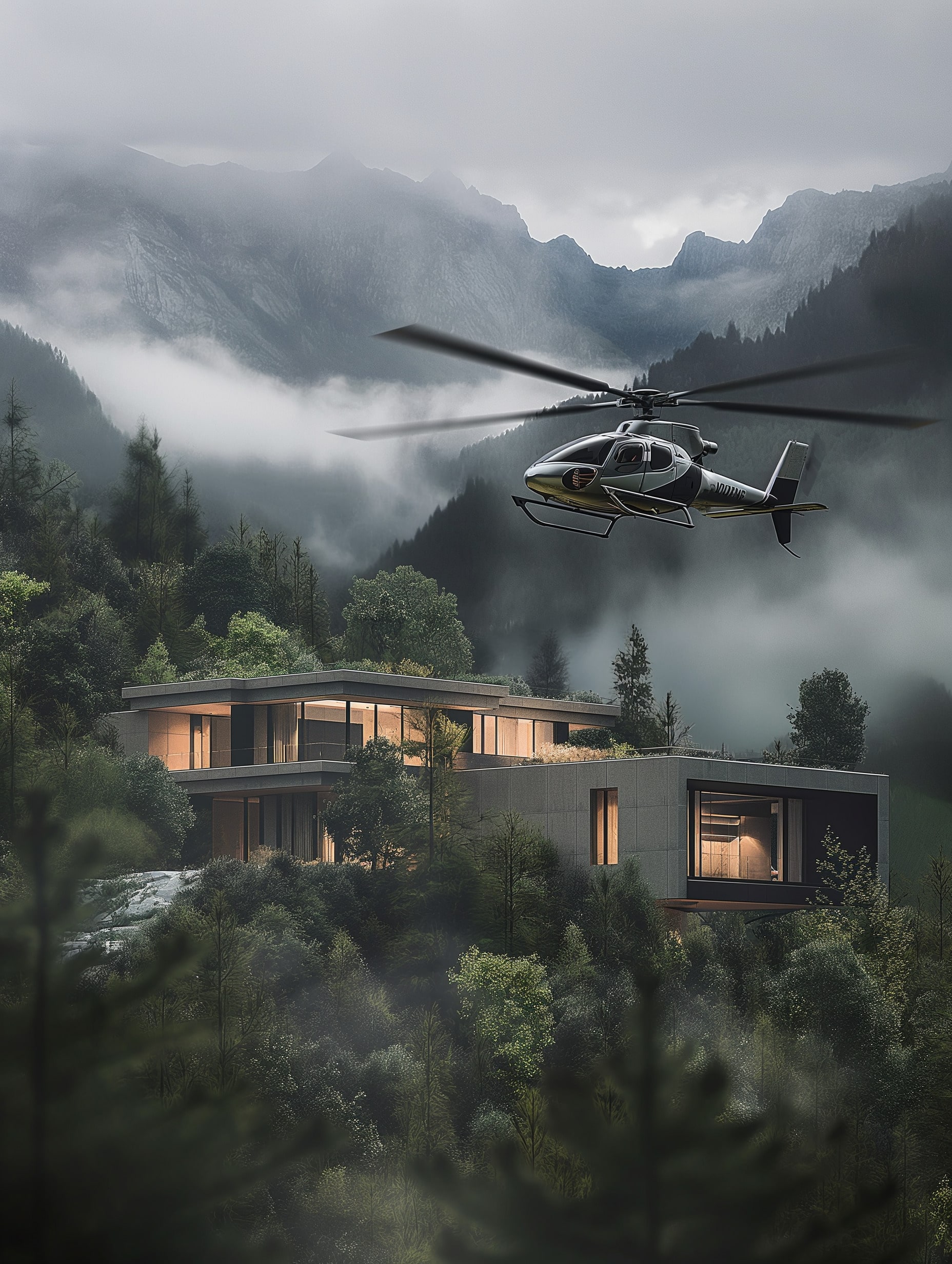
Helipad integration into luxury homes has changed over the past few years from being a posh extravagance to a useful aspect of high-end life. Many wealthy homes and developers are investing in the convenience, prestige, and architectural modification that rooftop helipads offer as private aircraft become more widely available and time becomes increasingly expensive. Beyond the glamour, however, is a complex web of legal, technical, and aesthetic factors that need to be skilfully managed.
This article explores the fundamentals of helipad design and construction, including the optimal helicopter landing pad size, architectural integration, and applicable laws. We will explore the problems and solutions that characterize this modern real estate innovation, which is intended for developers, architects, engineers, and private individuals wishing to upgrade their properties with aviation-ready features.

The Role of Helipads in Modern Residences
Installing a helipad at home is now more than simply a status symbol; it’s a calculated investment in productivity, mobility, and connectivity for the future. High-net-worth individuals increasingly see homes with helipads as not just aspirational but also necessary in a world where convenience equals power.
The demand for helipad-equipped residences is growing, from Hamptons beachfront houses to exclusive estates in Beverly Hills. Without compromising the luxury of a private lifestyle, these platforms offer smooth transportation choices, easy access to airports or business centers, and unmatched privacy. A private helipad guarantees instant takeoff, whether for business travel, medical situations, or just the wish to avoid city traffic.
However, private helipad benefits have purposes beyond logistics. It adds a unique asset that attracts high-end purchasers, increasing the overall value of a house in many developments. Personal aerial access is the ultimate luxury, saving time, reducing stress, and maximizing freedom as global cities grow busier and traffic situations become more unpredictable.
Benefits of Having a Private Heli Pad at Home
Everyday living becomes simplified and elevated when you have a helipad at home. Here are a few major benefits:
- Time efficiency – traveling by car can take hours in places like New York, São Paulo, and Los Angeles. By cutting a 90-minute journey down to a 15-minute flight, a rooftop helipad can maximize efficiency and free up priceless personal time.
- Unmatched privacy and security – a private helipad reduces public visibility for high-profile people, such as executives or celebrities. They may travel discreetly and bypass overcrowded airports because they have direct access to their property.
- Emergency response capabilities – a rooftop helipad provides a significant benefit in isolated or difficult-to-reach areas. Helicopter services can mean the difference between life and death in medical situations. Aerial access is not only luxurious but also life-saving during fire evacuations, natural disasters, or emergency scenarios.
- Increased property value – wealthy purchasers are frequently drawn to homes with helipadsand are prepared to pay more for the convenience. This investment has the potential to greatly improve the estate’s marketability and value.
Common Challenges of Rooftop Helipads
Even though there are many advantages, installing a rooftop helipad on a residential property can be extremely challenging. Let’s look at the most typical helipad regulations:
- Regulatory compliance – airspace is strictly controlled by government authorities. Zoning rules, aviation permits, and FAA (Federal Aviation Administration) requirements in the U.S. all dictate if and where a helipad can be built. It takes time, experience, and frequent involvement with city planners and aviation attorneys to overcome these legal obstacles.
- Structural engineering demands – a helipad is more than just a platform; it must support the entire weight of a helicopter, endure vibration, and take wind forces into consideration during landing. To guarantee safety and compliance while retrofitting an old home, a comprehensive structural analysis is necessary.
- Noise pollution – one of the most commonly raised issues by local governments and neighbors. Significant decibel levels are produced during takeoff and landing by helicopters. To minimize the impact on neighbors, developers must incorporate flight route planning and soundproofing technologies.
- Cost and maintenance – depending on materials, size, and location, the initial cost of building a helipad, especially one on a rooftop, can range from tens of thousands to several hundred thousand dollars. The long-term financial commitment is further increased by continuing inspections, maintenance of the lighting system, and aviation-grade materials.
Helipad Design and Technical Requirements
It takes more than just a place when building a helicopter pad; precise engineering, obedience to regulations, and smooth architectural integration are all necessary. Every component, from choosing the right helicopter landing pad size to putting in place cutting-edge safety features, must support both design and function.
Size and Structural Considerations for a Helicopter Landing Pad
The size of the helicopter landing pad depends on the aircraft. At least 1.5 times the helicopter’s rotor diameter is advised per FAA and ICAO regulations. For instance, a pad with a diameter of about 63 feet would be needed for a Bell 429 with a rotor span of 42 feet. But there are additional considerations rather than size. There are substantial structural requirements, particularly for rooftop helicopter pads. Engineers must take into account:
- Live and dead loads (aircraft weight plus pad)
- Rotor downwash and vibration
- Wind and weather stress
Standard materials include steel or reinforced concrete, and roofs usually need structural reinforcing to distribute loads properly. The helipad design needs to account for safe access, such as lifts or stairs.

Essential Safety Features for Heli Pads
Strict safety requirements must be met by modern rooftop helipads. Important elements include:
- Railings or perimeter safety nets – prevent falls during boarding, frequently retractable and fire-rated.
- Lighting systems – FAA-compliant lights for perimeter, approach, and visibility; solar options growing in popularity.
- Fire suppression – foam or chemical extinguishers triggered by heat sensors, ready for fuel-related incidents.
- Wind indicators – digital sensors or windsocks that direct approach and takeoff.
- Surface markings – use weather-resistant paint to make “H” symbols, load restrictions, and arrows visible.
- Drainage – water pooling is avoided and surface integrity is preserved using slanted surfaces and covert drainage.
IoT-based monitoring for real-time diagnostics is becoming a common feature of high-end helipad designs, improving safety and lowering maintenance expenses.
Integration of Helipads into Architectural Design
Blending a helipad with a building that already exists is a design challenge in addition to a technological one. It needs to blend in perfectly with the architecture of the home without detracting from its function, aesthetic harmony, or high standards of luxury. The rooftop helicopter pad should feel like a natural extension of the house, not an afterthought, whether it is located on the roof of a penthouse or a large estate. The idea is to make sure structural and modern helipad aesthetic elements work together.
Aesthetic Considerations in Helipad Design
A well-designed helipad ought to blend in with the aesthetics of the house. This involves elevating a landing platform rather than just hiding it. Key strategies for harmonizing visual appeal include:
- Material matching – using finishes like brushed aluminum, glass, or stone that match the home’s exterior. For example, a coastal villa might feature a pad with teak decking or glass balustrades to mirror nearby terraces.
- Discreet structures – retractable or sunken rooftop helicopter pads can be hidden when not in use to protect views and rooflines where zoning allows.
- Lighting design – without conflicting with the beauty of a home, ambient or hidden perimeter lighting may maintain nighttime usability.
It is not necessary for a building with a helipad to have an industrial appearance. The pad can be turned into a minimalist element that adds to the overall sophistication of the house with the right materials, design, and lighting.

Smart Home Integration for Homes with Helipads
Homes with helipads in contemporary estates are becoming more and more integrated with smart systems to improve safety and efficiency. Among the smart features of rooftop helipads are:
- Automated lighting and safety checks – solar or backup battery-powered lighting systems that are activated by the proximity of an aircraft or by predetermined schedules.
- Weather and flight integration – pillot dashboards and homeowner apps receive real-time wind, visibility, and temperature data from Internet of Things (IoT)-based sensors.
- Access control – only authorized users are allowed to enter the flight deck thanks to biometric access to helipad areas, such as fingerprint readers or facial recognition.
- Remote monitoring – homeowners can monitor video feeds, check pad status, and get maintenance notifications via smart devices.
These smart helipad systems frequently offer centralized management through integration with more comprehensive home automation platforms like Crestron or Control4.
Legal and Environmental Considerations
Adding a helipad to a private home requires navigating complicated zoning laws for helipads and regulations before construction ever starts. Environmental impact evaluations, safety helipad regulations, noise pollution, and zoning restrictions are all very important. Errors may result in expensive delays, court cases, or the pad having to be removed.
Key Legal Requirements for Building a Helipad
- Zoning and land use – building helicopter pads are not permitted in every residential area. Particularly in metropolitan or coastal locations, specific permissions or conditional approvals are frequently needed.
- FAA approval – you need to file a Notice of Landing Area Proposal (FAA Form 7480-1). To avoid interfering with already-existing aircraft paths, this initiates an airspace safety assessment.
- Environmental and community reviews – an Environmental Impact Assessment (EIA) is required in many areas, particularly in California. It might also be possible for locals to oppose the installation.
- Construction permits – in order to comply with safety and fire helipad regulations, comprehensive structural designs and engineering reports are necessary. Before building a helipad, it has to be approved.
Complying with the law is difficult. It is strongly advised to hire legal and aviation professionals, especially when incorporating a rooftop helipad into an existing building.
Environmental Impact and Noise Reduction for Heli Pads
Regulators and neighbors are most concerned about noise pollution. During takeoff, helicopters produce noise levels exceeding 100 dB, which is comparable to a jackhammer. These solutions can be implemented to deal with this:
- Optimized flight paths – avoid densely populated regions by taking direct routes to minimize disruption.
- Noise-reducing materials – use rubber composites and shock-absorbing surfaces to reduce noise and vibration.
- Natural buffers – trees and hedges in landscaping act as natural sound absorbers.
- eVTOL integration – new helipad designs are increasingly taking into account electric aircraft, which promise a cleaner, quieter future.
In addition to avoiding legal problems, careful consideration of rules and environmental effects guarantees long-term usage of rooftop helicopter pads and neighborhood cooperation.
Placing a helipad in a private home is no longer a futuristic dream; rather, it’s a clever decision for contemporary luxury, mobility, and intelligent infrastructure. Homes with helipads provide unparalleled convenience and enhanced living practicality for homeowners who appreciate privacy, time, and flexibility.
However, helipad design details are crucial for success. Property owners can add a rooftop helipad to their home that improves not just transportation but also the total value and sophistication of their home with the help of the right team, which includes engineers, architects, legal professionals, and aviation consultants.